comparison
Fermented vs Plain Rice Water: Which Actually Works Better for Your Skin?
Fermented rice water has the bigger reputation; the studies behind that reputation tested a commercial yeast filtrate, not a jar on a counter. What is known, what isn't, and when plain is the right call.
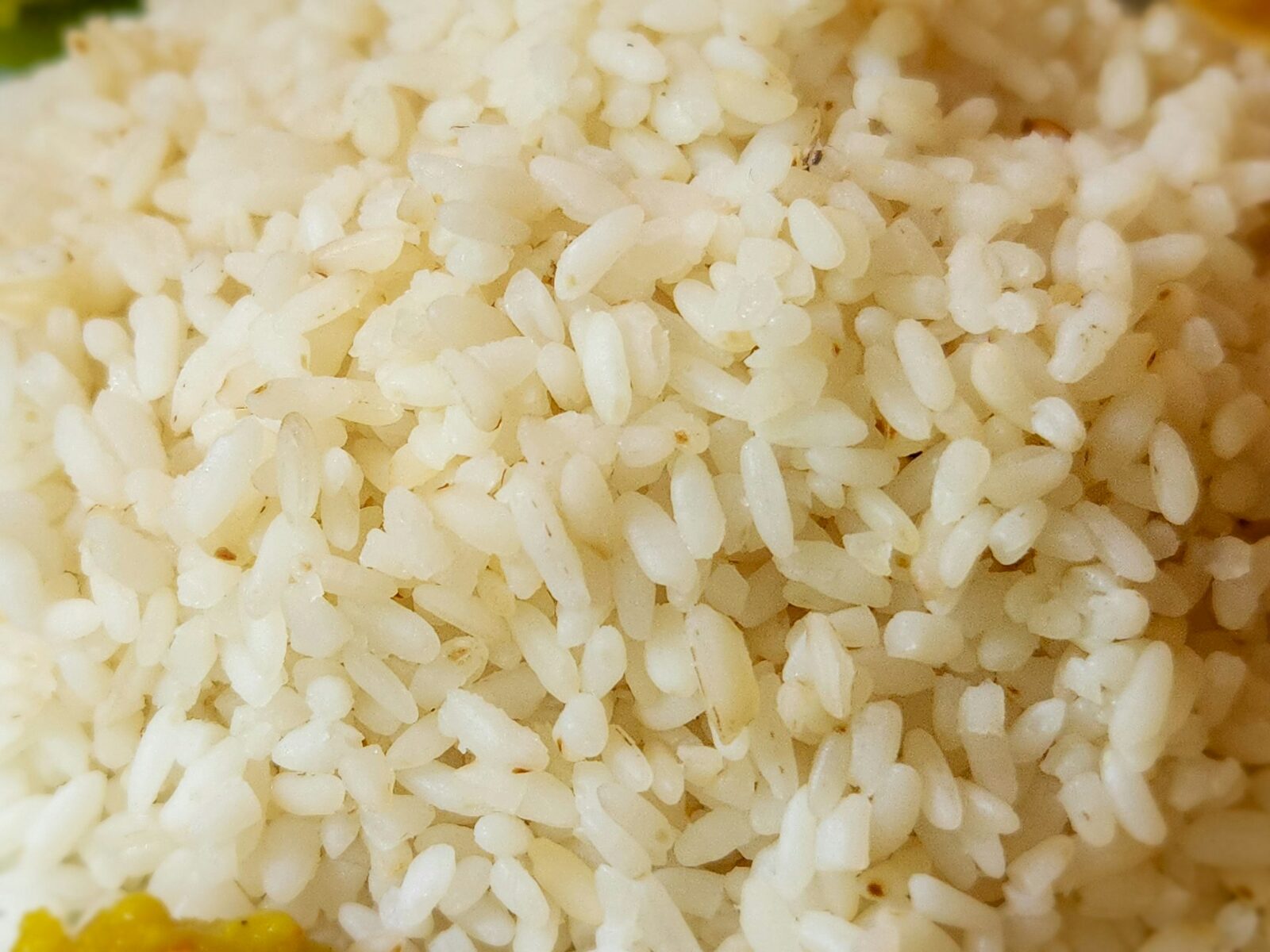
Fermented rice water is usually presented as the upgraded version: more potent, more brightening, closer to an expensive essence. We used to present it that way too. Having gone back through the sources, we can’t support that, and this article now says so.
Home-remedy note: this compares two home preparations and what sources say about them. It isn’t medical advice. Patch-test anything before it goes on your face.
The short version
- Plain rice water has one small human study near it, of a laboratory gel made mostly of rice water, and a simpler hygiene story.
- Homemade fermented rice water has no study behind it. The research people cite is about a different material.
- If you want what the ferment studies tested, that’s a product you buy, not something you can make.
- If you want a home remedy, plain is the easier one to defend.
What happens when rice water ferments
Leave rice water out and the microbes already present on the rice, in the water, on the jar and in the air start to feed on it. Some produce acids, which is why it turns sour.
Which microbes, and what they make, depends on your kitchen. That is the central problem. Commercial fermentation uses a chosen organism in controlled conditions. A jar on a counter uses whatever turns up.
We searched PubMed for studies of fermented rice water and read the titles of what came back: probiotics, fish farming, plant growth, food, a mouse wound model. None was a study of people putting home-fermented rice water on their faces (the search is here). So for every claim below, the honest status is “not measured”.
| Claim you’ll see | Status |
|---|---|
| Fermenting raises ferulic acid and antioxidants | Not measured in homemade rice water |
| Fermenting produces kojic acid | Not shown. Kojic acid is “produced by fungi” [Saeedi et al. 2019], particular moulds, not general souring |
| Fermented rice water has a skin-friendly pH | Not measured. It is sour, so it is more acidic than plain; how acidic varies by batch |
| Fermented keeps longer | No source. We give it no date at all |
Where the reputation comes from: Pitera
The case for fermented rice water nearly always arrives at SK-II. As the story is told, “elderly workers at a sake brewery had smooth, clear and young-looking hands”, a yeast extract was isolated, and “the brand was launched in the early 1980s” [Wikipedia, SK-II].
The ingredient is Galactomyces ferment filtrate, and it has real research:
- In cultured human skin cells it switched on genes for barrier proteins; the filtrate “induced the nuclear translocation of AhR with significant and dose-dependent upregulation of CYP1A1, FLG and LOR gene expression.” [Takei et al. 2015] That’s a cell-culture result.
- In a twelve-month study, 86 women used three products containing it twice a day, and measures of wrinkles, spots and roughness improved [Miyamoto et al. 2023]. The abstract’s own disclosure reads: “The other authors are employees of P&G Innovation GK.”
Two things follow. First, even for the commercial product, the human evidence is a company-run study of a three-product routine. Second, none of it transfers to a kitchen. The filtrate is made from one cultured yeast, filtered, standardised and preserved. Home-fermented rice water shares a word with it, and that’s all.
If the ferment research is what attracts you, our source-based comparison of ferment essences looks at what’s on the shelf.
Efficacy, directly compared
Brightening and dark spots
Neither has evidence. For plain rice water, a review found only laboratory support. For homemade fermented, nothing. Where kojic acid is used in real products, the safety panel’s ceiling is 1% [CIR kojic acid 2010], a reminder that it’s a measured ingredient, not a by-product you can count on. See rice water for dark spots.
Soothing and barrier support
Plain has the better case, through starch: rice starch in bath water helped irritated skin recover [De Paepe et al. 2002], and a 96% rice-water gel was well tolerated in a small study [Marto et al. 2018]. Fermenting breaks starch down, so if starch is the useful part, fermenting works against it. That last step is our reasoning, not a finding.
Sensitivity
Plain is the more cautious choice, in our judgment; the two have not been compared. Fermented rice water is sour, which means acidic, and what else is in it varies from batch to batch. Guidance for rosacea-prone skin is to treat it gently [NIAMS, rosacea] and to skip toners altogether [AAD, rosacea skin care].
Hygiene
This is where the two really differ. Plain rice water can follow the food rule: “Stick to the “two-hour rule” for leaving items needing refrigeration out at room temperature.” [FDA, storing food safely] Fermenting requires breaking it for a day or two. The FDA’s view of water in cosmetics is blunt: “You may be adding harmful microorganisms.” [FDA, microbes in cosmetics] Encouraging microbes to grow in an unpreserved liquid and then putting it on your face is a risk nobody has quantified.
When to use which
Choose plain if:
- This is your first time.
- Your skin is sensitive, dry, or prone to rosacea or eczema.
- You’re making ice cubes.
- You’d like to follow storage rules that have a source.
Fermented: we recommend against it. Nothing about your skin type makes an uncontrolled ferment a known quantity. If you make it anyway:
- Understand it’s an experiment with no evidence in its favour.
- Patch test it separately, and keep it away from eyes and broken skin.
- Stop at 48 hours at the latest, freeze it, and discard it at the first off sign.
How to make fermented rice water carefully
The fermented recipe has the full steps. The points that matter most:
- Start with a jar washed in very hot soapy water.
- Use freshly made soaked rice water, with the first rinse discarded.
- Cover loosely. Leave at room temperature for 24 hours, 48 at most.
- Stop by the clock, at 24 to 48 hours, not by smell. A mild sour smell is expected and proves nothing about safety. Anything rotten, cheesy, solvent-like, or any surface growth: bin it. Otherwise freeze it, which pauses growth and does no more than that.
- Patch test it separately from plain. A reaction to one tells you little about the other.
The verdict
On the evidence, plain wins by default: there is a little indirect support for it, and none for fermented. On hygiene, plain wins clearly. The idea that fermenting unlocks brightening compounds comes from research on a commercial ingredient that you can’t reproduce at home.
That doesn’t mean fermented rice water does nothing; it means nobody knows what it does. Our recommendation is plain. If you make the fermented version anyway, don’t expect a homemade Pitera, and keep it away from sensitive skin, eyes and broken skin.
Frequently asked questions
What's the actual difference between plain and fermented rice water?
Plain rice water is water and rinsed-off starch, used fresh. Fermented rice water is the same liquid left at room temperature for a day or two so that whatever microbes are present start to break it down, which turns it sour. No study has measured what homemade fermenting produces or compared the two on skin.
How do you know when rice water is fermented enough?
The usual sign is a mild sour smell, like plain yoghurt, after 24 to 48 hours. That tells you microbes have been active. It doesn't tell you which ones, and there is no test you can do at home to find out.
Does fermented rice water smell bad?
It should smell mildly sour. Rotten, cheesy or solvent-like smells, or anything growing on the surface, mean throw it out.
Can you ferment rice water for longer than 48 hours?
We wouldn't. There is no evidence that longer is better, and every extra hour at room temperature is more time for unwanted microbes to grow.
Is fermented rice water safe for sensitive skin?
We don't recommend it for sensitive, broken or rosacea-prone skin. It is sour, its microbial content is unknown, and dermatology guidance for sensitive and rosacea-prone skin is to keep things gentle and avoid toners. Use plain rice water, patch-tested, or skip it.
Sources for this page
Each line is an entry in the evidence register. The quoted passage was found in the source, word for word, on November 11, 2026.
- Takei et al. 2015 · in vitro · tested: Galactomyces ferment filtrate (the commercial ingredient sold as Pitera)
“GFF induced the nuclear translocation of AhR with significant and dose-dependent upregulation of CYP1A1, FLG and LOR gene expression.”
Takei K, Mitoma C, Hashimoto-Hachiya A, et al. Galactomyces fermentation filtrate prevents T helper 2-mediated reduction of filaggrin in an aryl hydrocarbon receptor-dependent manner. Clin Exp Dermatol. 2015;40(7):786-93. - Miyamoto et al. 2023 · human · 86 women, 12 months · tested: Three SK-II products containing Galactomyces ferment filtrate, used together twice a day
“we compared facial parameters reflecting aging of the skin in 1999 and 2010 in 86 female volunteers.”
Miyamoto K, Inoue Y, Yan X, et al. Significant Reversal of Facial Wrinkle, Pigmented Spot and Roughness by Daily Application of Galactomyces Ferment Filtrate-Containing Skin Products for 12 Months. J Clin Med. 2023;12(3):1168. - Wikipedia, SK-II · encyclopedia (tertiary) · tested: Nothing. An encyclopedia summary of the brand's history
“it was observed that elderly workers at a sake brewery had smooth, clear and young-looking hands”
Wikipedia contributors. SK-II. Wikipedia, The Free Encyclopedia. - Saeedi et al. 2019 · review · tested: Published literature on kojic acid
“Kojic acid (KA) is a natural metabolite produced by fungi that has the ability to inhibit tyrosinase activity in synthesis of melanin.”
Saeedi M, Eslamifar M, Khezri K. Kojic acid applications in cosmetic and pharmaceutical preparations. Biomed Pharmacother. 2019;110:582-593. - CIR kojic acid 2010 · safety review · tested: Kojic acid as a cosmetic ingredient
“The Cosmetic Ingredient Review (CIR) Expert Panel concluded that the 2 end points of concern, dermal sensitization and skin lightening, would not be seen at use concentrations below 1%; therefore, this ingredient is safe for use in cosmetic products up to that level.”
Burnett CL, Bergfeld WF, Belsito DV, et al. Final report of the safety assessment of Kojic acid as used in cosmetics. Int J Toxicol. 2010;29(6 Suppl):244S-73. - Marto et al. 2018 · in vitro + human · 12 volunteers, 28 days · tested: Rice water, built into a hydrogel that was 96% rice water
“However, no scientific evidence supports their role in skincare products.”
Marto J, Neves Â, Gonçalves LM, Pinto P, Almeida C, Simões S. Rice Water: A Traditional Ingredient with Anti-Aging Efficacy. Cosmetics. 2018;5(2):26. - De Paepe et al. 2002 · human · not stated in the abstract · tested: Rice starch added to bath water
“Exposure to rice-starch-containing bath water--twice daily for 15 min--led to a 20% improvement on the healing capacity of damaged skin.”
De Paepe K, Hachem JP, Vanpee E, Roseeuw D, Rogiers V. Effect of rice starch as a bath additive on the barrier function of healthy but SLS-damaged skin and skin of atopic patients. Acta Derm Venereol. 2002;82(3):184-6. - FDA, storing food safely · guidance · tested: U.S. regulator guidance for food
“Stick to the "two-hour rule" for leaving items needing refrigeration out at room temperature.”
U.S. Food and Drug Administration. Are You Storing Food Safely? - FDA, microbes in cosmetics · guidance · tested: U.S. regulator guidance
“Don't add water or saliva to cosmetic products, such as mascara. You may be adding harmful microorganisms.”
U.S. Food and Drug Administration. Microbiological Safety and Cosmetics. - NIAMS, rosacea · guidance · tested: U.S. government health guidance
“Treat your skin gently. Wash your face with cleansers made for sensitive skin, and moisturize regularly. Avoid exfoliants and products that contain alcohol.”
National Institute of Arthritis and Musculoskeletal and Skin Diseases (NIH). Rosacea: Diagnosis, Treatment, and Steps to Take. - AAD, rosacea skin care · guidance · tested: Dermatologist guidance for the public
“Never use an astringent or toner.”
American Academy of Dermatology. 7 rosacea skin care tips dermatologists recommend.