Recipe
Rice Water — Fermented Method
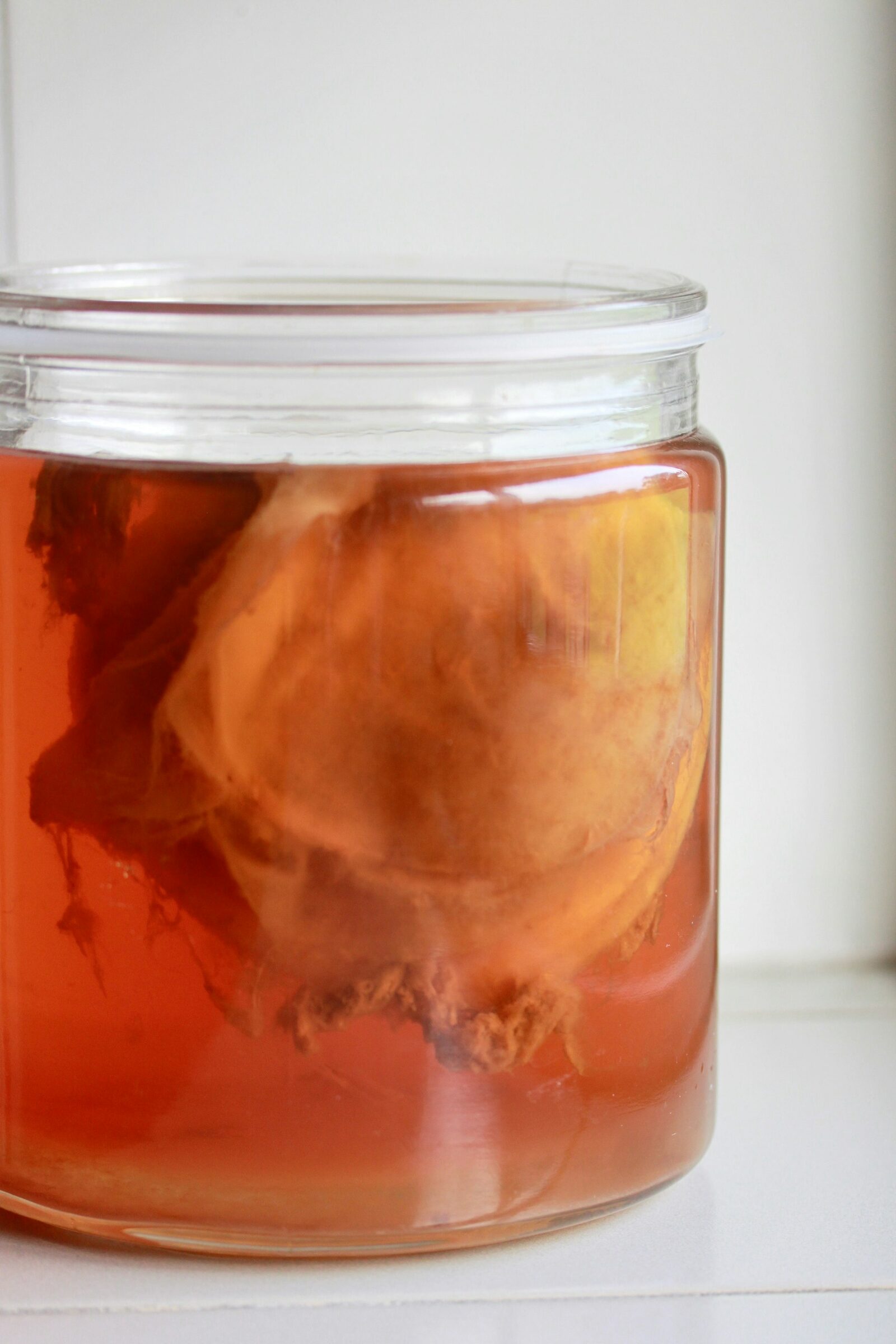
The traditional sour version, with its caveats up front: no study has tested home-fermented rice water on skin, it sits outside food-safety storage rules, and it is not a homemade Pitera. A careful method for those who want to try it anyway.
Ingredients
- ½ cup plain white rice any variety
- 2 cups cool water plus extra for the first rinse
Equipment
- Fine-mesh strainer
- Clean glass bowl
- Very clean glass jar
- Cheesecloth, or the jar lid left slightly ajar
Read this before you start
This page used to describe fermented rice water as the brightening-focused version, higher in ferulic and kojic acid and kinder to skin’s pH. We went looking for the evidence and didn’t find it. We’ve kept the recipe, because people make this regardless and a careful method is better than a careless one, and we’ve rewritten everything around it.
What we can say:
- No study has tested home-fermented rice water on skin. Our search is in the evidence register.
- It isn’t Pitera. The ferment research is on a filtrate from one cultured yeast, studied in cell cultures [Takei et al. 2015] and in a company-run study of branded products [Miyamoto et al. 2023].
- Kojic acid is not a given. It’s “a natural metabolite produced by fungi” [Saeedi et al. 2019], specific ones. Souring is not the same process.
- It breaks the storage rule on purpose. The FDA’s rule for perishable food is two hours at room temperature [FDA, storing food safely]. This method uses 24 to 48.
Our recommendation is not to make this version and to use the plain soaked method instead. Smell can tell you a batch has gone wrong; it cannot tell you a batch is safe. The steps below are for readers who have decided to make it regardless.
The fuller comparison is in fermented vs plain rice water.
Why this method
Curiosity, mostly. The sour version is the one most often recommended online, and some people simply prefer it. If that is you, the steps below are about keeping the process as clean and as short as possible.
Step-by-step
1. Rinse the rice and discard the rinse (30 seconds)
Cover ½ cup of rice with water, swirl, pour the water away. Some of the arsenic rice carries leaves with it [Raab et al. 2009].
2. Soak at room temperature (30 minutes)
Add 2 cups of cool fresh water to the rinsed rice and leave for 30 minutes, swirling once or twice.
3. Strain into the jar (1 minute)
The jar should be freshly washed in very hot soapy water and air-dried. Strain the liquid in. Cook the rice for dinner.
4. Loosely cover the jar — do not seal airtight
Fermentation gives off gas. Cover with cheesecloth held by a band, or rest the lid on without screwing it down. The cover is to keep dust and insects out.
5. Leave at room temperature 24–48 hours
Out of direct sun. Decide the stopping time before you start: 24 hours, or 48 at the very latest. The clock decides, not the smell.
6. Stop by the clock and freeze it
Stop at 24 hours, or 48 at the very latest, whatever it smells like. A mild sour smell, like plain yoghurt, is what to expect; it shows microbes have been active and does not show which ones, so it is not a sign the batch is safe. Any other smell, or anything from the troubleshooting list below, means discard. Pour into a clean ice-cube tray and freeze. We suggest the freezer over the fridge, because we can’t give this liquid a fridge life. Freezing only pauses things: the food guidance we rely on says most bacteria cannot grow in a freezer, not that freezing kills them or removes anything they have already made. A frozen cube of a bad batch is still a bad batch.
7. Use one cube at a time
Thaw a cube in a clean dish, use it, and discard what’s left. Nothing goes back.
Troubleshooting
- Rotten, cheesy, or nail-polish-remover smell: discard.
- Film, fuzz, or pink, green or black spots: discard, and wash the jar in very hot water.
- Slimy or ropey when swirled: discard.
- Still smells of nothing at 48 hours: discard and try the soaked method instead. Extending the time isn’t the fix.
When in doubt, throw it out. The ingredients cost a few cents.
Warnings
- Unknown microbes. You are growing whatever was on the rice and in the air, then putting it on your face. The FDA’s caution about water in cosmetics, “You may be adding harmful microorganisms” [FDA, microbes in cosmetics], applies with more force here.
- Patch test this version separately from plain rice water, for a week or more [AAD, testing products].
- Not for sensitive, broken or eczema-prone skin, and not near the eyes.
- Rosacea skin: skip it. Guidance for rosacea is to “Treat your skin gently” [NIAMS, rosacea], and a sour, uncontrolled ferment is not that. See the rosacea post before starting anything.
- Not if your immune system is weakened. Ask your care team about homemade skin preparations generally.
- Don’t drink it.
When to choose this method over others
We don’t think there is a good reason to choose it. If you’ve decided to try the sour version anyway, knowing there’s no evidence it does more, this page is the careful way.
For a gentler everyday preparation, see the soaked method. For the starchier version, see the boiled method.
Related
Storage
We give fermented rice water no use-by date. Fermenting keeps it at room temperature for 24–48 hours, which is outside the two-hour food rule, and we found no source for how long the result keeps. If you make it, freeze it as soon as it is ready and treat each cube as single use.
Frequently asked questions
How do I know when it's done fermenting?
The usual sign is a mild sour smell, like plain yoghurt, after 24 to 48 hours at room temperature. That shows microbes have been active. It doesn't show which ones.
Why fermentation makes it better for brightening
It hasn't been shown to. The claim rests on kojic acid, which is made by particular fungi under controlled conditions; no study shows a jar of rice water on a counter produces it. The human studies of ferments used a commercial yeast filtrate in branded products.
Is a slightly sour smell normal on skin?
A mild sour smell is what this method produces. If your skin stings, reddens or itches, rinse it off and stop.
What if I forget and leave it out for 3+ days?
Throw it out. There is no evidence that longer is better, and more time at room temperature is more time for unwanted microbes.
Can I ferment the leftover rice water from boiled/soaked batches?
Only a freshly made soaked batch. Don't ferment rice water that has already been stored, and don't ferment boiled rice water, which is thick with starch and already carries heat-resistant spores.
Sources for this page
Each line is an entry in the evidence register. The quoted passage was found in the source, word for word, on November 11, 2026.
- Saeedi et al. 2019 · review · tested: Published literature on kojic acid
“Kojic acid (KA) is a natural metabolite produced by fungi that has the ability to inhibit tyrosinase activity in synthesis of melanin.”
Saeedi M, Eslamifar M, Khezri K. Kojic acid applications in cosmetic and pharmaceutical preparations. Biomed Pharmacother. 2019;110:582-593. - Takei et al. 2015 · in vitro · tested: Galactomyces ferment filtrate (the commercial ingredient sold as Pitera)
“GFF induced the nuclear translocation of AhR with significant and dose-dependent upregulation of CYP1A1, FLG and LOR gene expression.”
Takei K, Mitoma C, Hashimoto-Hachiya A, et al. Galactomyces fermentation filtrate prevents T helper 2-mediated reduction of filaggrin in an aryl hydrocarbon receptor-dependent manner. Clin Exp Dermatol. 2015;40(7):786-93. - Miyamoto et al. 2023 · human · 86 women, 12 months · tested: Three SK-II products containing Galactomyces ferment filtrate, used together twice a day
“we compared facial parameters reflecting aging of the skin in 1999 and 2010 in 86 female volunteers.”
Miyamoto K, Inoue Y, Yan X, et al. Significant Reversal of Facial Wrinkle, Pigmented Spot and Roughness by Daily Application of Galactomyces Ferment Filtrate-Containing Skin Products for 12 Months. J Clin Med. 2023;12(3):1168. - FDA, storing food safely · guidance · tested: U.S. regulator guidance for food
“Stick to the "two-hour rule" for leaving items needing refrigeration out at room temperature.”
U.S. Food and Drug Administration. Are You Storing Food Safely? - FDA, microbes in cosmetics · guidance · tested: U.S. regulator guidance
“Don't add water or saliva to cosmetic products, such as mascara. You may be adding harmful microorganisms.”
U.S. Food and Drug Administration. Microbiological Safety and Cosmetics. - Raab et al. 2009 · laboratory · tested: Rinsing and cooking of basmati, long-grain, white and brown rice
“Rinse washing was effective at removing circa. 10% of the total and inorganic arsenic from basmati rice, but was less effective for other rice types.”
Raab A, Baskaran C, Feldmann J, Meharg AA. Cooking rice in a high water to rice ratio reduces inorganic arsenic content. J Environ Monit. 2009;11(1):41-4. - AAD, testing products · guidance · tested: Dermatologist guidance for the public
“Apply the product to a test spot twice daily for seven to 10 days.”
American Academy of Dermatology. How to test skin care products. - NIAMS, rosacea · guidance · tested: U.S. government health guidance
“Treat your skin gently. Wash your face with cleansers made for sensitive skin, and moisturize regularly. Avoid exfoliants and products that contain alcohol.”
National Institute of Arthritis and Musculoskeletal and Skin Diseases (NIH). Rosacea: Diagnosis, Treatment, and Steps to Take.